
Neck Pain and Migraine: Why Your Neck Matters More Than You Think
Many people think of migraine as “just a headache.” But for many patients, migraine also comes with neck pain, stiffness, and tension that can make daily life harder — even when the headache itself isn’t present.
A recent qualitative study published in the Brazilian Journal of Physical Therapy explored how people with migraine experience neck pain, how it affects their lives, and how they try to manage it. What the researchers found highlights an important gap in care — and an opportunity for a more complete, movement-focused approach to treatment.
What the Study Looked At (In Simple Terms)
Researchers interviewed 27 adults with migraine who also had neck pain. Instead of measuring numbers or scans, they focused on something just as important: how patients describe their pain, what they think causes it, and how they cope with it.
This type of research helps us understand what patients are actually dealing with day to day — not just what shows up on a test.
Key Findings: Neck Pain Is Common, Confusing, and Often Ignored
The study found several important themes:
- Neck pain is very common in people with migraine
- Patients described neck pain as tightness, stiffness, locking, or tension
- Neck pain caused discomfort, worry, and frustration
- Most people were uncertain about what caused their neck pain
- Many relied on trial-and-error self-management, without clear guidance
Interestingly, many participants said neck pain did not stop them from daily activities — unless it occurred with a migraine attack. This may explain why neck pain is often brushed off or left untreated, even though it adds to overall discomfort and stress.
The authors concluded that healthcare providers should assess more than just headaches when treating migraine — especially the neck and upper spine (craniocervical region).
Why Neck Pain and Migraine Are Connected
Research shows that people with migraine are much more likely to experience neck pain than people without headaches. The neck and head share nerve pathways, muscle connections, and movement patterns. Poor posture, stress, muscle weakness, joint stiffness, and repetitive positions can all increase strain on the neck — potentially worsening symptoms.
When neck pain isn’t addressed, it can:
- Increase muscle tension
- Alter posture and movement
- Reduce confidence in movement
- Add to the overall migraine burden
Where Occupational Therapy Fits In
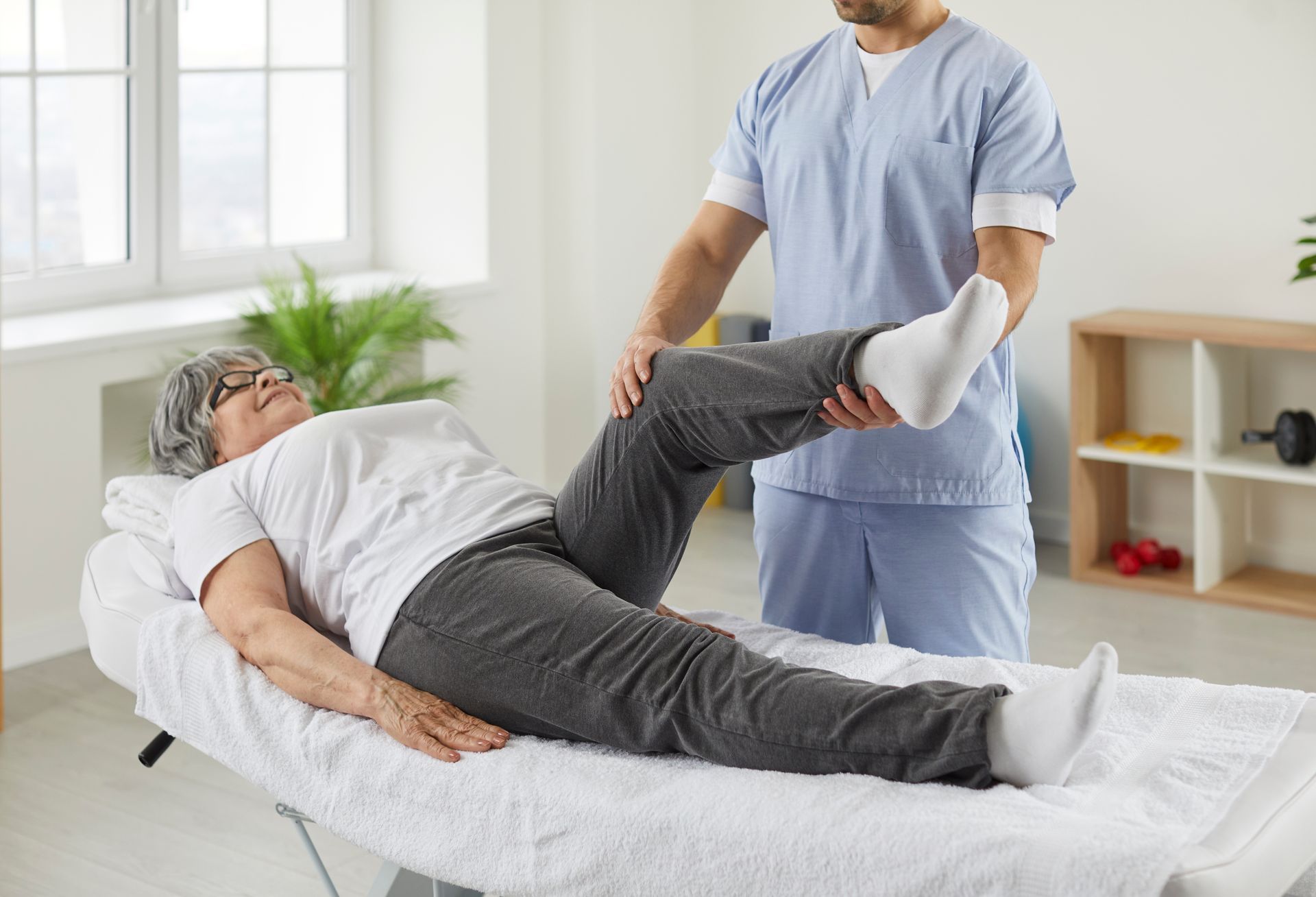
Occupational Therapy (OT) looks beyond pain alone. We focus on how pain affects daily life, including work, school, sleep, posture, stress, and movement habits.
For patients with migraine and neck pain, OT may help by:
- Improving neck, shoulder, and upper-back mobility
- Addressing posture and ergonomic stressors (workstations, phones, backpacks, sleep positions)
- Teaching movement strategies to reduce strain during daily activities
- Building strength and endurance to support the neck and shoulders
- Helping patients understand how emotions, stress, and habits affect pain
- Providing clear guidance, so patients don’t feel confused about how to manage symptoms
OT helps patients move with more confidence — not just during exercise, but during real-life tasks.
A Team-Based Approach Works Best
At Thrive Sports & Spine Associates, we use a multidisciplinary approach to migraine-related neck pain:
- Chiropractic care may improve joint mobility and spinal mechanics
- Acupuncture may help regulate pain, muscle tension, and nervous system response
- Medical providers help manage migraine diagnosis and medication when needed
- Occupational Therapy bridges the gap between treatment and daily function
This team approach addresses pain, biomechanics, posture, movement, and performance — not just symptoms in isolation.
The Takeaway
This study reinforces an important message:
Neck pain matters in migraine — even when it doesn’t stop daily activities.
When neck pain is misunderstood or ignored, patients are left guessing how to manage it. With proper assessment, education, and movement-based care, patients can gain clarity, confidence, and better control over their symptoms.
If you experience migraines with neck pain, a comprehensive evaluation of the neck and upper spine may be an important step toward feeling and moving better.
Study Link
https://doi.org/10.1016/j.bjpt.2025.101565
Reference
Dietrich Deitos Rosa, M., Florencio, L. L., Marçal, J. C. S., Dach, F., Palacios-Ceña, D., & Bevilaqua-Grossi, D. (2025). The experience of neck pain in people with migraine: A qualitative study. Brazilian Journal of Physical Therapy.